With the introduction of a new DE13 R engine and a new generation of Optidriver gearboxes, Renault Trucks is upgrading the powertrain of its T, T High, C and K ranges. These developments reduce fuel consumption and CO? emissions by up to 4% compared with the previous generation. Compatible with HVO and B100 renewable fuels, this new powertrain also improves vehicle performance and driving comfort.
Faced with rising operating costs and increasing demands to decarbonise road transport, transport operators are looking for solutions capable of immediately improving operational efficiency. To address these challenges, Renault Trucks is introducing a new powertrain on its T, T High, C and K ranges, combining the new DE13 R engine, a new generation of Optidriver gearboxes and advanced predictive driving systems.
“The decarbonisation of road transport relies on several complementary levers. Alongside the acceleration of the development of our electric offer, we continue to improve the energy efficiency of our combustion-engine vehicles in order to help our customers reduce their fuel consumption, CO? emissions and total cost of ownership from today. This new powertrain is a concrete illustration of this approach,” says Antoine Duclaux, President of Renault Trucks.
New powertrain: greater energy efficiency and driving comfort
The DE13 R is available in versions up to 540 hp with 2800 Nm torque and was designed using new materials including high strength grey iron and compacted graphite iron which provide greater robustness and durability. It incorporates several technical developments designed to optimise combustion and reduce energy loss. Maximum cylinders pressure can now reach 250 bar, while a new fuel supply system with an external high-pressure fuel pump improves injection precision and engine efficiency.
The DE13 R is fitted as standard with a more powerful engine brake (Optibrake+) for better driving comfort and improved vehicle control, in particular on hilly terrain.
The engine is paired with a new generation of Optidriver gearboxes integrating the latest steering software and optimised gear shift strategies. Changing gear is up to 20% faster and much easier than on the previous generation.
The new powertrain also leverages on fuel-reduction technologies:
- Optivision+ predictive cruise control, which uses topographical data and road signs to adapt gear shifting, acceleration and vehicle speed to road conditions.
- The Predictive Engine Stop Start system, based on predictive cruise control, automatically shuts down the engine during rolling phases when the vehicle is freewheeling (Optiroll). Essential vehicle functions remain active, and the engine restarts instantly whenever required.
Aerodynamic optimisations complement these developments in order to improve air penetration and fully benefit from fuel consumption reductions.
Depending on usage, this new generation of vehicles delivers savings on fuel and CO? emissions of up to 4% compared with the previous generation.
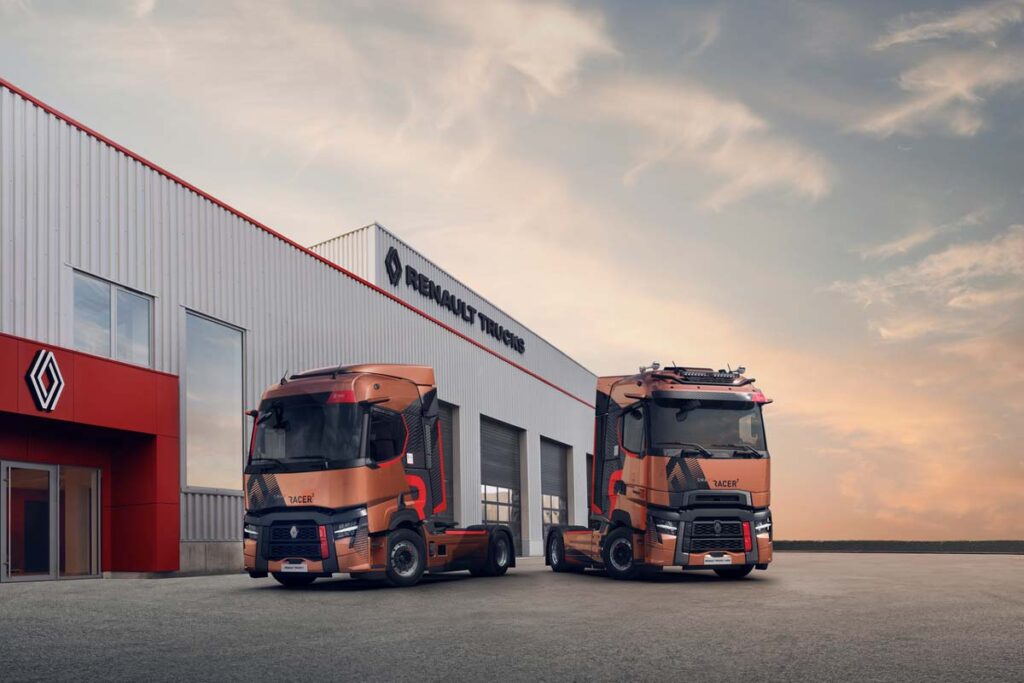
For maximum energy savings and productivity, Renault Trucks also offers a Smart Racer2 version with the full range of energy-efficiency enhancements: improved aerodynamics, Optivision+, low rolling resistance tyres and advanced predictive powertrain control.
The DE13 R engine complies with the NNR3 noise emissions standard contributing to a lower sound level.
A more comfortable drive
This latest range also brings improvements in terms of driving comfort and life on board.
The new powertrain contributes to a smoother and quieter driving experience thanks to the responsiveness of the DE13 R, which delivers the highest torque on the market for a 540 hp engine, combined with smoother gear changes.
The trucks are also equipped with features designed to improve everyday driving conditions, including Smart Steering which enhances directional stability and integrates Driver Assist functions capable of keeping the vehicle in lane while automatically adjusting the following distance.
With its 2027 model year, Renault Trucks continues to optimise its long-haul and construction ranges in support of driver wellbeing and transport operators’ operational efficiency.