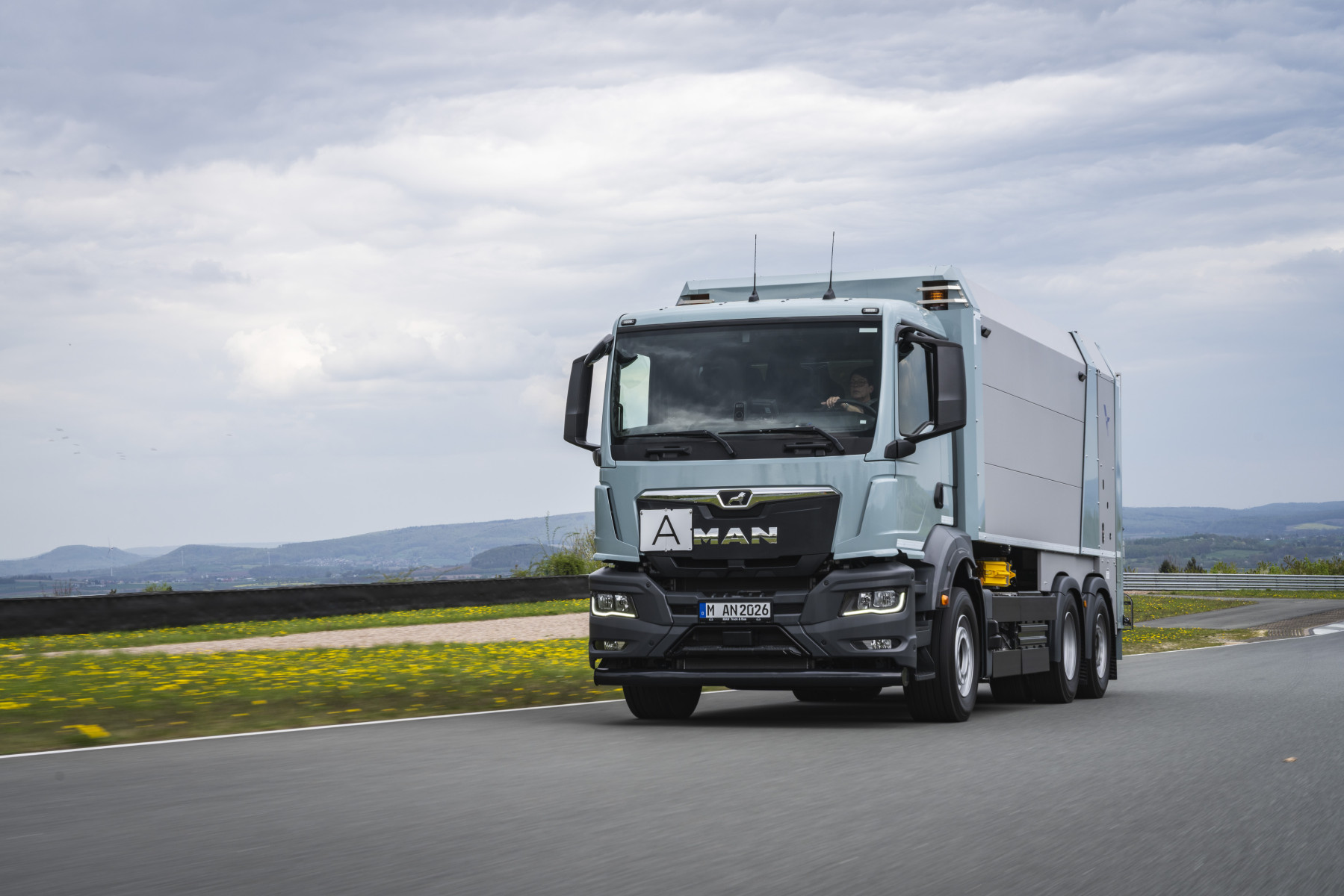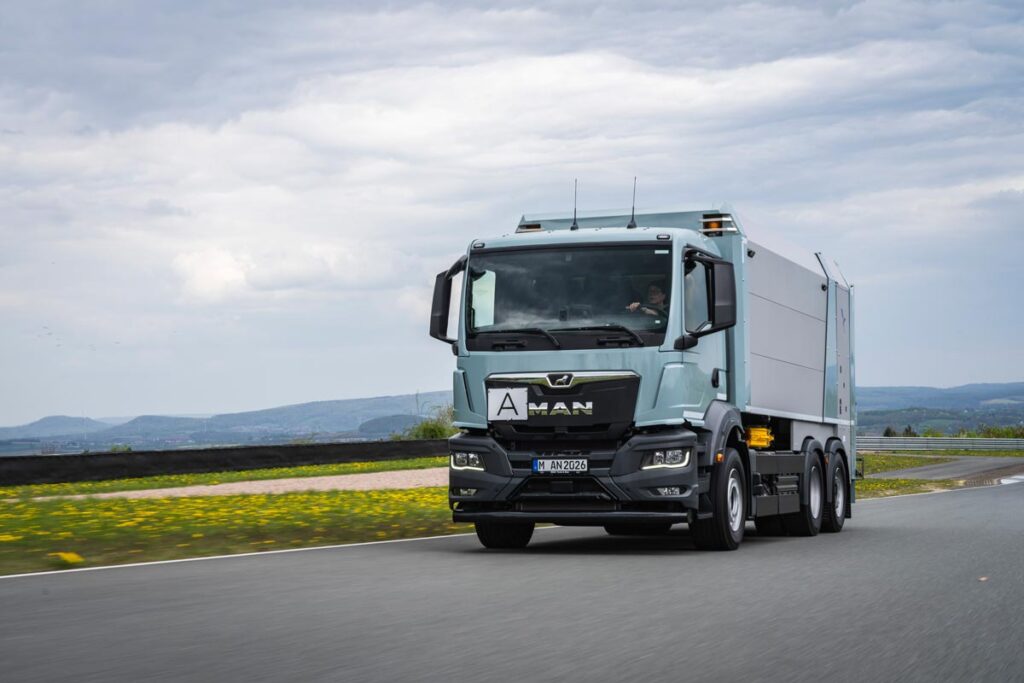
Electric mobility has arrived in the municipal sector. MAN Truck & Bus already offers cities and local authorities a wide range of electrifiable vehicle concepts, including waste collection vehicles, skip loaders, flatbed trucks with loading cranes, as well as swap-body vehicles and tanker trucks. This enables large parts of municipal operational profiles to be delivered locally emission-free—including waste collection and winter gritting services, as well as fire brigade and special-purpose vehicles.
Each year, the commercial vehicle manufacturer sells around 4,000 trucks for municipal and fire brigade applications. MAN fire brigade vehicles hold a particularly strong position. With a market share of around 40 per cent in the European core markets of Germany, France, Great Britain, Austria, Spain, Slovakia, Poland, Switzerland, Belgium, Italy and Hungary, the company is the leading player in this segment.
Austria Shows How It’s Done
One specific example is the Upper Styrian town of Judenburg. Since the end of 2025, a fully electric MAN rear-loading waste collection vehicle has been in daily operation there for more sustainable waste disposal. Compared with distribution or long-distance haulage, waste collection is very energy-intensive due to the predominance of stop-and-go traffic with continuous operation of bodywork functions. The real-world range per round in Judenburg is up to 120 kilometres depending on the operational profile, and in peak cases even up to 180 kilometres. And this is all whilst handling up to 800 bins. Energy consumption is in the region of around 1.6 to 2 kWh per kilometre, depending on topography and bin weight.
Fully electric municipal vehicles have also become firmly established in everyday operations in other parts of Austria. The City of Vienna operates a growing fleet of electrically powered vehicles in the waste management sector—including waste collectors, skip loaders and vehicles with tipper semi-trailer hydraulics for different operational profiles. This picture is supplemented by applications in the logistics sector, for example at Österreichische Post AG, which is deploying several MAN eTGS vehicles not only in Vienna but also for the first time in Styria and Tyrol.
Typical municipal operational profiles with frequent stop-and-go operation and clearly plannable routes make these applications particularly well-suited to electric drive. The high-voltage batteries, specially developed for commercial vehicle use, are manufactured by MAN in Nuremberg and are designed for high cycle stability and long service life in everyday municipal use.
In the area of bodywork, MAN collaborates with around 30 to 40 specialised bodywork manufacturers, depending on the market and application, and thus offers a broad spectrum of municipal solutions—from waste collection and winter gritting services to special-purpose vehicles. Powerful electric power take-offs and high-voltage interfaces deliver up to 90 kW of direct current power depending on the application, enabling fully electric operation even of complex municipal bodywork.
Municipal Procurement as a Model for Sustainable Solutions
The examples show that the ramp-up of emission-free municipal vehicles succeeds where clear framework conditions, planning security and market-ready solutions come together. Funding instruments can act as a stimulus, particularly in the early market phase, and facilitate investment. In addition, the EU Clean Vehicles Directive (CVD) creates binding planning security: it applies EU-wide and obliges public contracting authorities in all member states—including Austria, Germany, France, Italy, Spain and the Netherlands—to comply with minimum quotas for clean vehicles in vehicle procurement as well as in relevant service contracts (including waste management and public transport). From 2026 onwards, these quotas will rise significantly, for example to 15 per cent clean heavy goods vehicles and 65 per cent clean buses, of which at least half must be emission-free. Austria’s example already demonstrates that these requirements are increasingly being embedded directly in tender specifications and are sending clear signals to the vehicle industry, bodywork manufacturers and charging, grid and energy infrastructure providers.
The technology is available: vehicles and bodywork are ready. However, for the market ramp-up to succeed, coordinated cooperation between the vehicle industry, bodywork manufacturers and charging, grid and energy infrastructure is required. The public sector in particular can assume a pioneering role here: a consistent focus on emission-free vehicles in procurement accelerates economies of scale and sends clear signals to industry and infrastructure partners. At the same time, a deliberate focus on European value creation strengthens innovation, competitiveness and resilient supply chains in Europe.
“Electric mobility in the municipal sector is no longer a pilot project but a practical solution for everyday use,” says Friedrich Baumann, Executive Board Member for Sales and Customer Solutions at MAN Truck & Bus SE. “Examples such as Judenburg and Vienna clearly demonstrate: it works! And not only technically but also operationally and economically. Funding programmes make a crucial contribution to triggering investment and bringing innovation to wider deployment.”
Clear Advantages for Cities and Local Authorities
There are numerous arguments for local authorities to switch to electric mobility. Electric municipal vehicles fulfil the requirements of the Clean Vehicle Directive and make a measurable contribution to local and national climate targets, as they operate without local emissions. At the same time, cities and local authorities benefit economically: operating costs fall over the entire lifecycle—particularly through reduced maintenance requirements and the use of cost-effective electrical energy, for example from their own or regional sources. Thanks to clearly defined, plannable operational profiles, charging and operational times can be optimally coordinated. Quiet operation enables flexible deployment times and significantly reduces noise pollution in residential areas.
How these advantages pay off in concrete terms is once again demonstrated by the example of Stadtwerke Judenburg: there, the electric waste vehicle is operated entirely using self-generated energy from hydropower and photovoltaics. This reduces operating costs whilst simultaneously strengthening energy independence in daily operations.